About us

Two people, one kitchen table.

SolveBlock is not a firm doing a product study of a hobby. It is a cuber and his dad, building the thing the cuber kept wishing existed.

Roger Mendoza Sr. and Roger Mendoza Jr. together at a cubing competition, Roger Jr. holding a partly solved cube.
Roger Sr. and Roger Jr. at a competition — where most of the arguing about this device gets done.

The question that started it

Roger Jr. was solving, stopping the timer, and writing the time down. On paper. Then adding five of them up, crossing out the best and the worst, and dividing by three.

His dad watched for a while and asked the obvious thing:

"Why are you recording your averages by hand?"

There was no good answer. The timer already knows the time. The arithmetic is fixed by the rulebook. The only reason a cuber does it on paper is that nobody had built the thing that does it for them — right there next to the mat, with no phone, no account, and no signal.

The answer arrived on both of them at once: why don't we solve this for all cubers? That sentence is the whole company.

Who makes it

A cuber and the person who asked the question

Between the two of them, every decision in this device points at the mat rather than at a spec sheet.

Roger Mendoza Jr. The cuber. The sessions, the penalties and the PBs are his, and so is the veto on anything that would not survive an ordinary practice evening.
Roger Mendoza Sr. The one who asked the question. If you have ever had a parent ask why you do something the hard way, you already know how much of the design is really theirs.

How it actually gets built

A folding table, a timer, and a lot of evenings

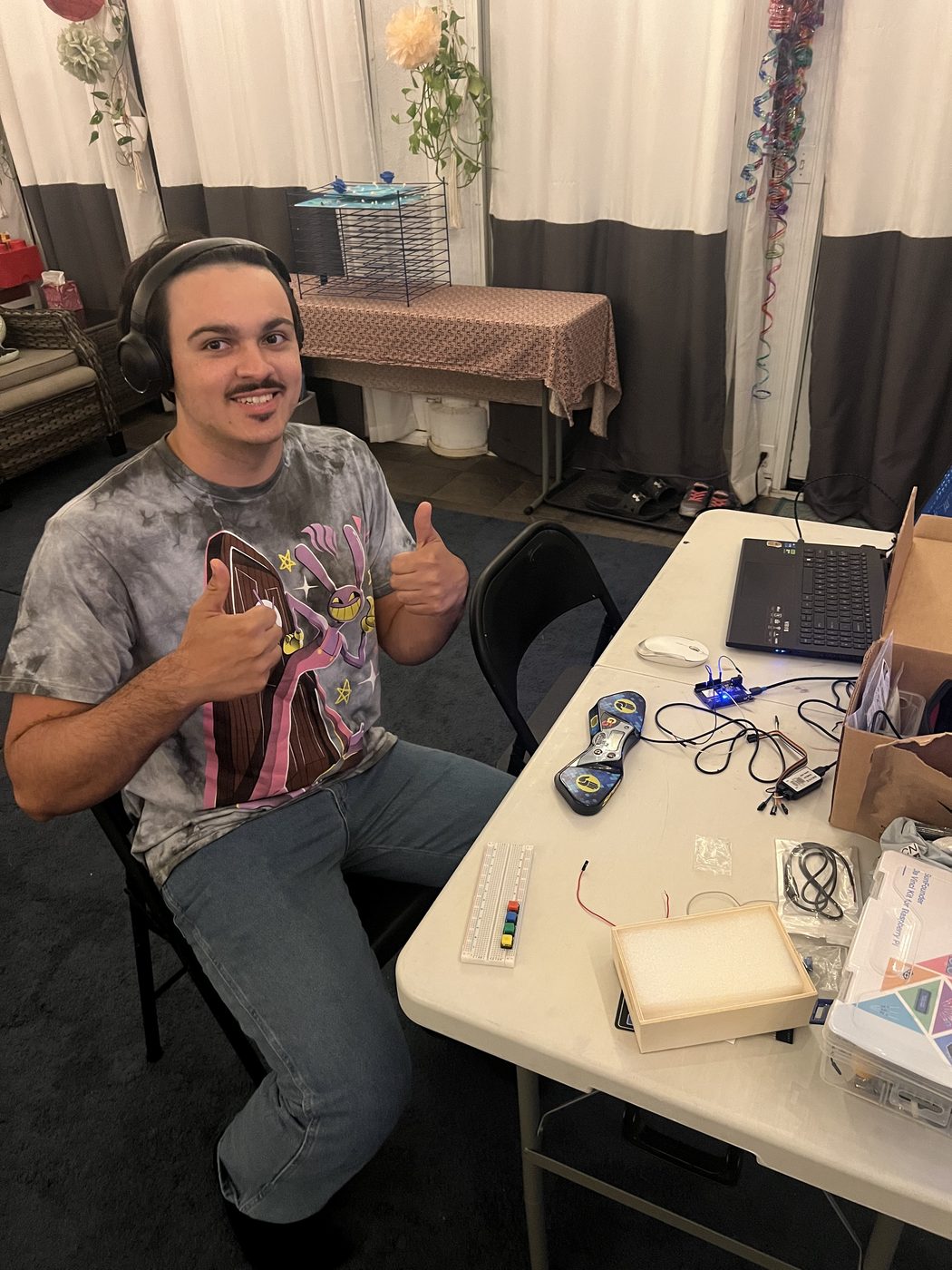
There is no lab. There is a table, a StackMat, a soldering iron and two people who keep testing it against the only thing that matters — whether it helps a cuber solve faster.

Roger Jr. at the workbench giving a thumbs up, with a laptop, a StackMat timer and prototype electronics on the table.
The bench. Roger Jr. mid-build. The timer on the table is the one SolveBlock listens to, and it stays the source of truth.
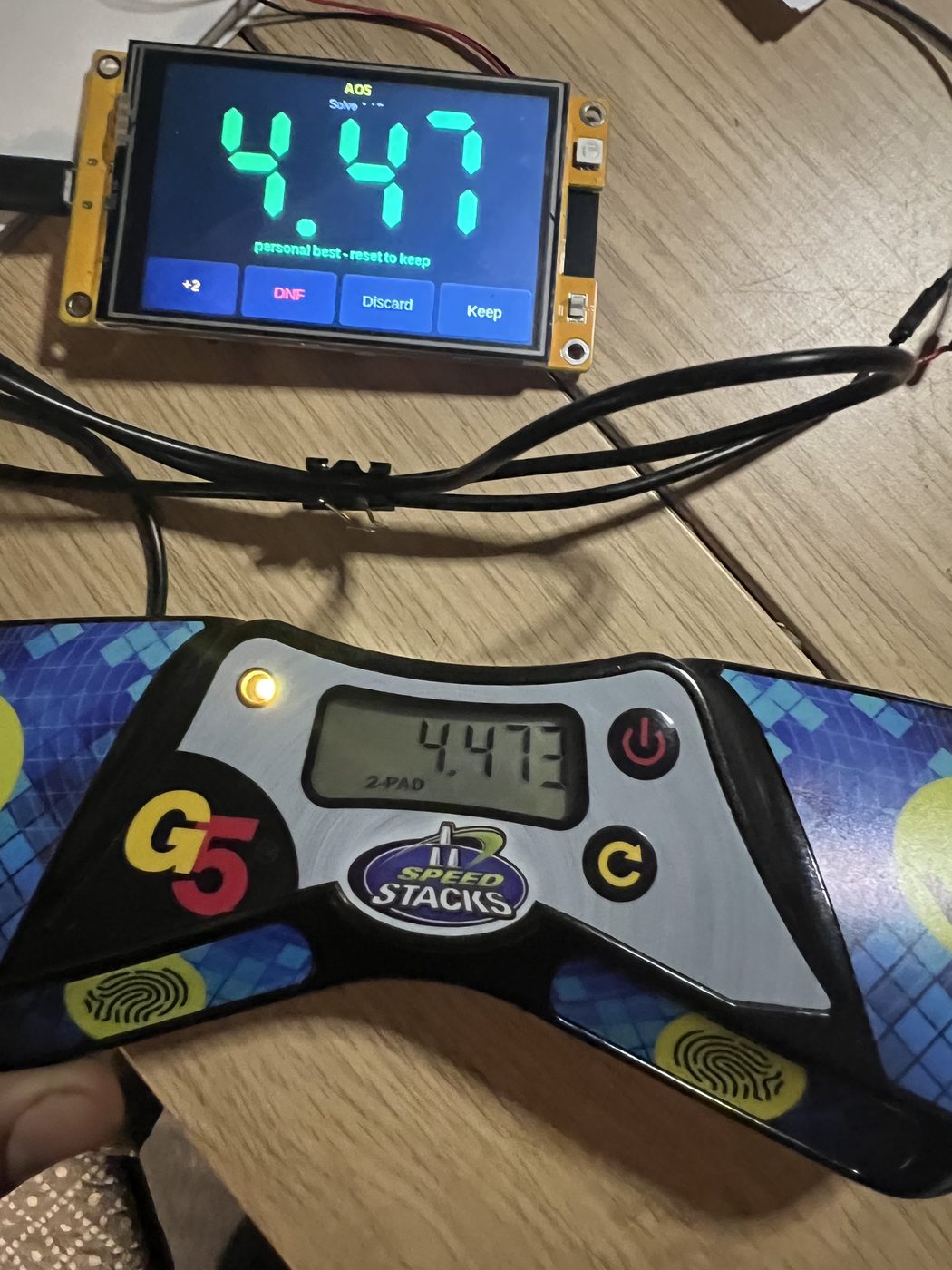
A SolveBlock prototype screen reading 4.47 next to a Speed Stacks G5 timer reading 4.473.
The whole idea, in one photograph. The G5 reads 4.473. SolveBlock reads 4.47 — truncated to the hundredth, the way the rulebook says a single is recorded. A bench test, not anyone's competition result.

AI agents at work

Agents in the geometry, the signal, and the firmware

Two people and a fleet of AI agents, put to work on the parts of this that reward being checked a thousand times rather than once.

Geometry

The enclosure is generated by a script rather than drawn by hand — the case, the fit, the badge on the front. Agents work that geometry, so changing the shape is a re-run rather than a redraw, and all four enclosures we are choosing between came out of the same source.

Making sure the timer signal is accurate

The one thing this device must never get wrong is the number the timer sent it. Agents check the decode against the protocol and against real hardware on the bench — a G5 and a G4, both working — which is why the photograph shows 4.473 on the timer and 4.47 on the screen, and not something close to it.

Agentic firmware collaboration

The firmware is built the same way: agents and people on one codebase, with a hardware seam so a single set of code runs on more than one board, an averaging engine that follows the rulebook exactly, and thousands of automated checks that run on every change.

All of that happens in the workshop. What ships is a quiet, deterministic appliance that needs neither a network nor a model to do its job — and every coaching line it can show you was written by a human.

The badge

Even the logo gets modelled

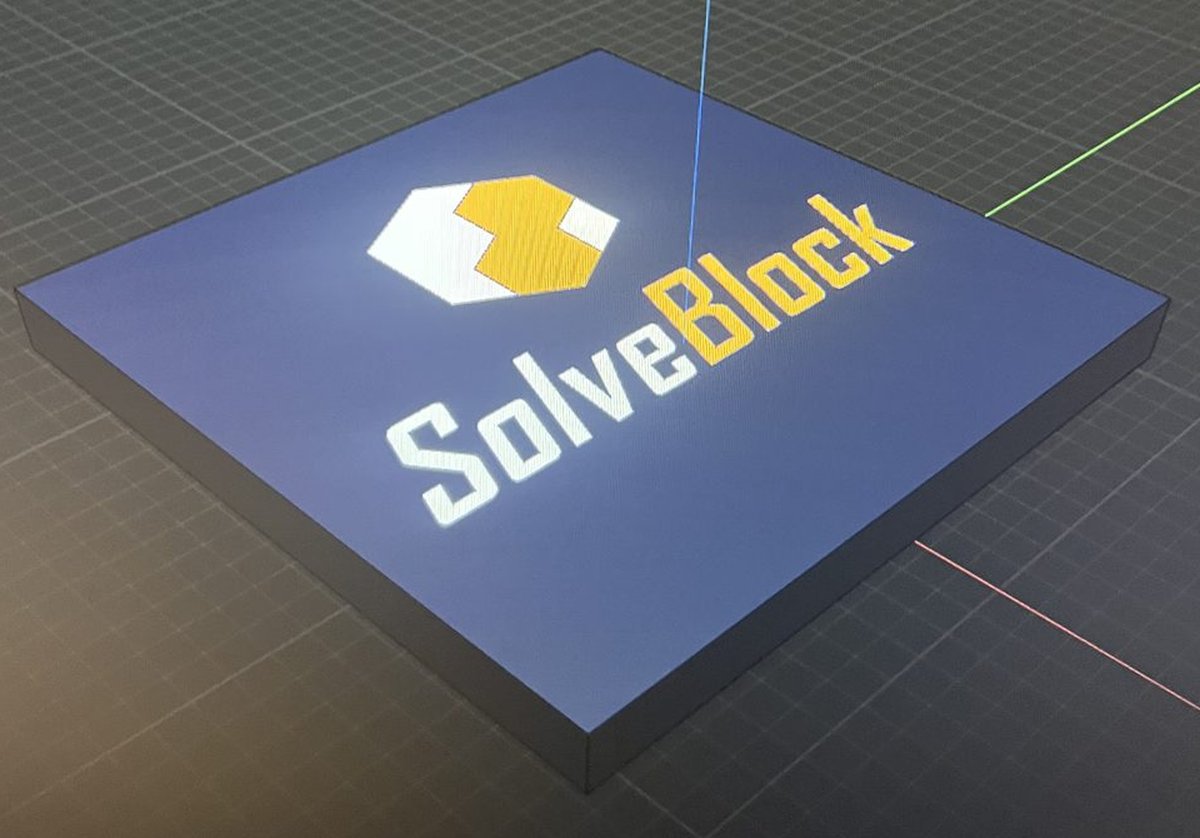
The enclosure is generated by a script rather than drawn by hand, and the mark on the front is part of the model rather than a sticker applied at the end.

The SolveBlock logo modelled as a raised badge in 3D CAD software.
The SolveBlock mark, modelled as a raised badge.

Help us build the right one

We have not shipped, there is no price yet, and the shape is genuinely still open. Join the waitlist and tell us what you would change — some of the first production units go free to people selected from that list.

Join the waitlist