
Your timer stays the boss
SolveBlock never generates an official time. It listens to your StackMat and keeps the session around it. The one thing a timing device must never do is disagree with the timer.
SolveBlock is a dedicated speedcubing appliance that sits beside your StackMat and keeps the session — WCA-correct averages, personal bests, penalties, history and trends.
No phone. No account. No Wi-Fi. Power it on and practise.
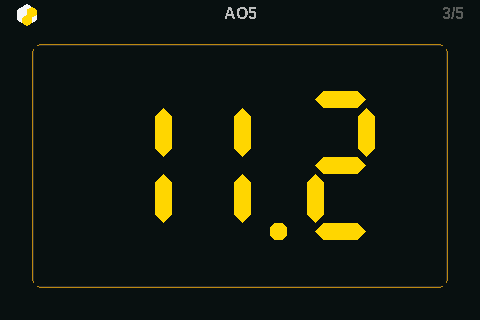
A running solve. Nothing else on screen.
The question that started it
Roger Jr. was solving, stopping the timer, and writing the time down. On paper. Then adding five of them up, crossing out the best and the worst, and dividing by three.
His dad watched for a while and asked the obvious thing:
"Why are you recording your averages by hand?"
There was no good answer. The timer already knows the time. The arithmetic is fixed by the rulebook. The only reason a cuber does it on paper is that nobody had built the thing that does it for them — right there next to the mat, with no phone, no account, and no signal.
The answer arrived on both of them at once: why don't we solve this for all cubers?
— Roger Mendoza Jr. & Roger Mendoza Sr.

Who is building this
Roger Jr. is the cuber — the sessions, the penalties and the PBs are his, and so is the veto on anything that would not survive an ordinary practice evening. Roger Sr. is the one who asked why the averages were being done on paper.
Between them there is no lab and no product committee. There is a folding table, a StackMat, and a lot of evenings spent checking the thing against the only question that matters: does this help a cuber solve faster?
Read our storyWhat it does
Every one of them had to answer the same question before it was built: does this help a cuber solve faster?
SolveBlock never generates an official time. It listens to your StackMat and keeps the session around it. The one thing a timing device must never do is disagree with the timer.
The timer's reset signal is also the keep-and-next command. Solve, reset, solve. You only ever touch SolveBlock when something unusual happened — a +2, a DNF, a misscramble to discard.
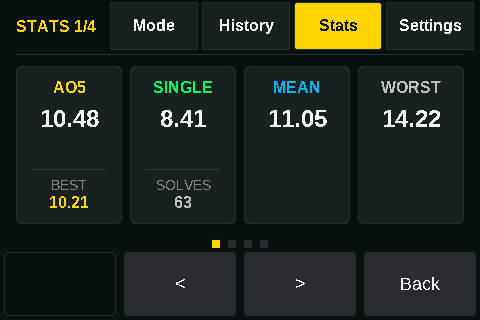
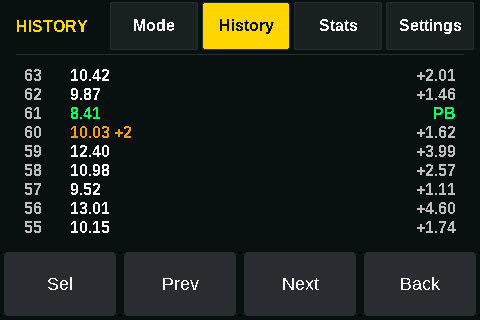
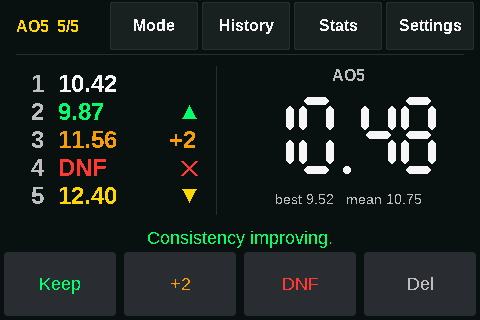
Ao5, Ao12, Mo3, and rolling Ao50 and Ao100 — computed the way a delegate would, every time. There is no "precision" setting, because there is only one right answer.
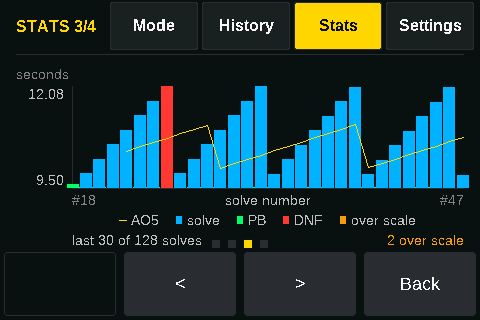
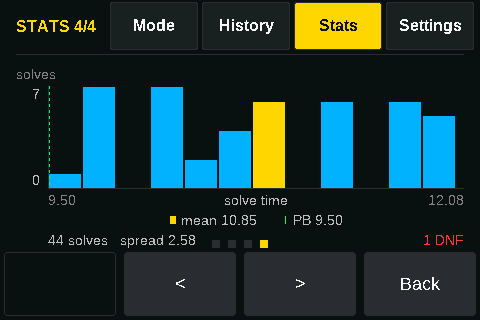
Two charts no timer draws. Trend asks am I getting faster. Spread asks am I consistent — a tight cluster means train technique; a long right-hand tail means the lockups are the problem.
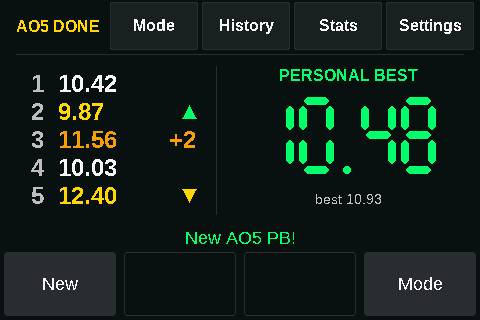
About fifty short lines, hand-written. "New AO5 PB!" "Consistency improving." "Take a short break." It speaks when it has something to say and stays silent the rest of the time — which is most of the time.
Not "works offline" — has no radio. No Wi-Fi, no Bluetooth, no cloud, no account, no subscription, nothing to log into and nothing to lose when a service shuts down. Your session lives on the device.
Boots in under two seconds. The timer never flickers, because a running solve redraws only the digits that changed.
There is no scramble generator yet, and there will never be a random-move one — the WCA uses random-state, and a scramble that is only nearly official is worse than none on a device whose whole promise is correctness. Doing it properly is on the roadmap. Doing it approximately is not. An absent feature is a gap you can fill. A subtly wrong one is a trap you cannot see.
On the screen
These are not mockups. They are drawn by the same code the device runs — same layout, same font, same palette. The times in them are examples, not anyone's session.
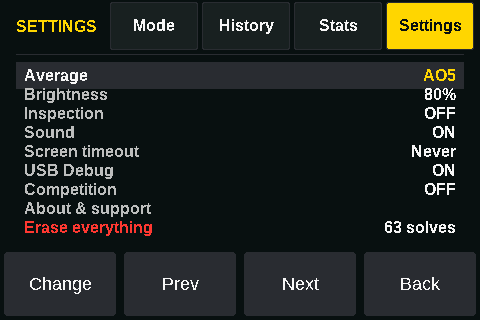
And here it is running
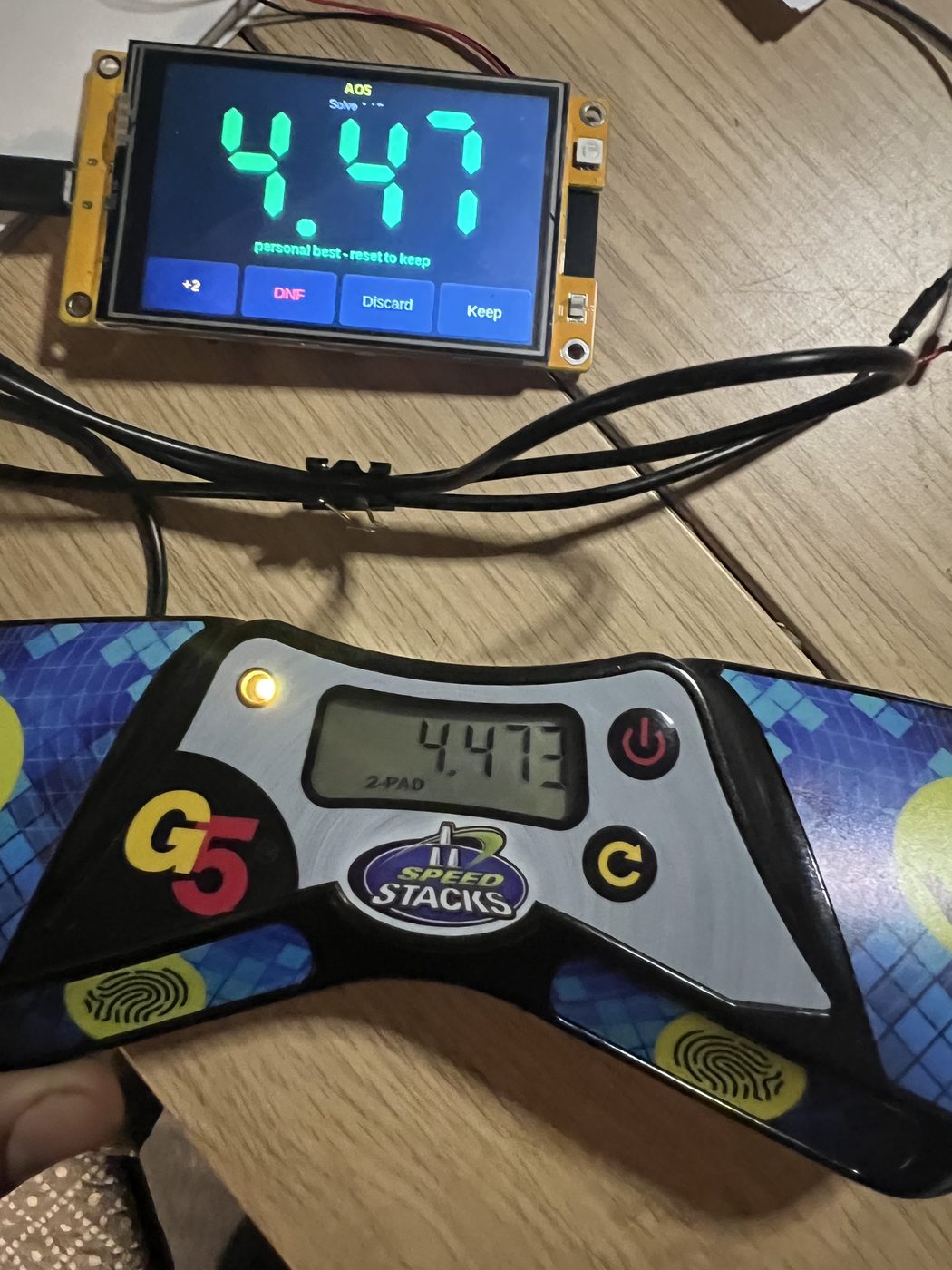
That is the entire argument in one photograph. The timer is the source of truth; SolveBlock takes what it says and truncates the single to the hundredth, the way the rulebook records one. It does not round, it does not add a millisecond, and it does not disagree with the timer.
A prototype on the bench, not the finished enclosure — and that time is a test, not anyone's competition result.
AI agents at work
Two people and a fleet of AI agents, put to work on the parts of this that reward being checked a thousand times rather than once.
The enclosure is generated by a script rather than drawn by hand — the case, the fit, the badge on the front. Agents work that geometry, so changing the shape is a re-run rather than a redraw, and all four enclosures we are choosing between came out of the same source.
The one thing this device must never get wrong is the number the timer sent it. Agents check the decode against the protocol and against real hardware on the bench — a G5 and a G4, both working — which is why the photograph shows 4.473 on the timer and 4.47 on the screen, and not something close to it.
The firmware is built the same way: agents and people on one codebase, with a hardware seam so a single set of code runs on more than one board, an averaging engine that follows the rulebook exactly, and thousands of automated checks that run on every change.
All of that happens in the workshop. What ships is a quiet, deterministic appliance that needs neither a network nor a model to do its job — and every coaching line it can show you was written by a human.
The family
The full SolveBlock is the one we are building first. A smaller SolveBlock Mini follows it, for cubers who want the session kept and not much else.
The full device, driven entirely by its touchscreen. This is the one in every screenshot above.
Smaller, simpler, and cheaper. Not a touchscreen, so it does less — deliberately.
Still being decided
Four enclosures we have modelled and printed, and we have not settled on one. It is the easiest thing to change before a production run and the hardest thing to change after — so we are asking cubers rather than guessing.
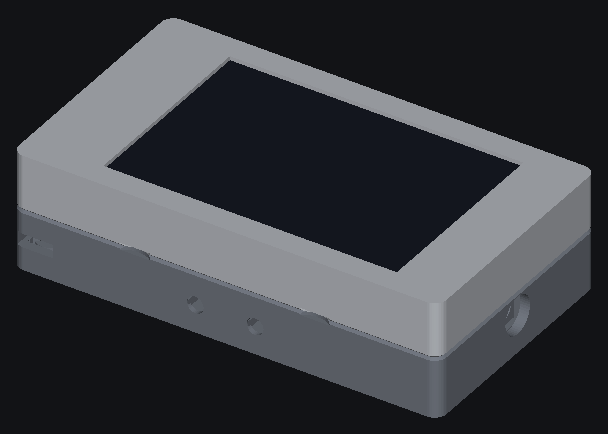 A Flat
Lies down. Lowest profile.
A Flat
Lies down. Lowest profile.
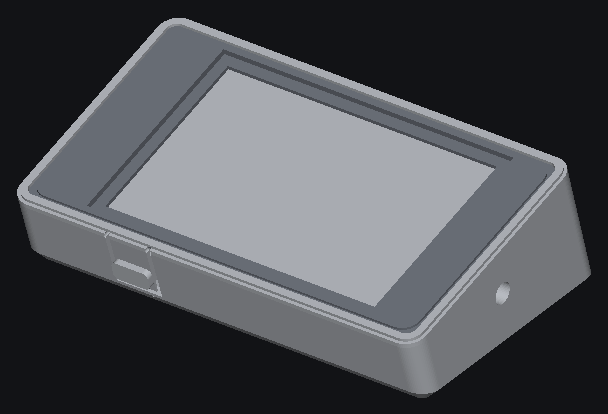 B Wedge
A gentle built-in lean.
B Wedge
A gentle built-in lean.
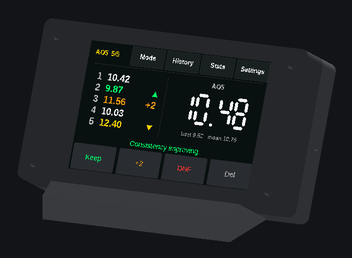 C On a stand
Flat unit, separate stand.
C On a stand
Flat unit, separate stand.
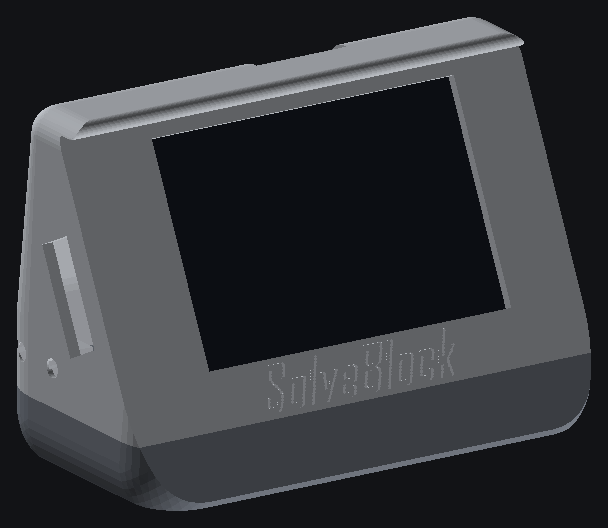 D Upright block
Stands up on its own.
D Upright block
Stands up on its own.
Renders of enclosures that exist as models, not photographs of a finished product, and not to scale against each other. The screen is the same in all four. Tell us which one to build.
The short version
Written the way a good manual would write it.
Join the waitlist and we will email you when SolveBlock is ready to buy and when there is a price. Some of our first production units go, free, to people selected from that list. Tell us what you think while you are there — that part is what actually shapes what we build.
Join the waitlistEvery cuber we have ever met keeps their times somewhere they will eventually lose. We built the place they won't.